Author: Albert Amekudzi

  • From Aid to Autonomy

    From Aid to Autonomy

    Why Ghana Must Build Self-Reliance Through Health, Research, and Mining-Led Industrialisation

    Ghana’s reported decision to walk away from a proposed United States funding arrangement allegedly tied to access to citizens’ personal data has sparked an important national conversation. Beyond the headlines and geopolitics, it brings us back to a simple but uncomfortable truth: Ghana still leans heavily on others to fund some of its most critical needs.

    And while there’s nothing inherently wrong with partnerships after all, even the strongest households borrow sugar from neighbours once in a while, problems arise when you can’t cook a full meal without knocking on someone’s door.

    This moment, therefore, should not just be about what Ghana rejected, but about what Ghana must now build.

    Health: From “Help Us” to “We’ve Got This”

    For years, donor support has helped Ghana fight diseases like malaria, HIV/AIDS, and tuberculosis. That support has saved lives, no question about it. But it has also created a system where, if the tap is turned off, we suddenly start scrambling for buckets.

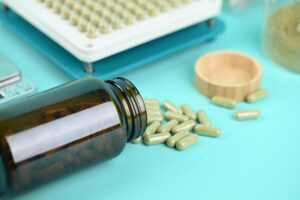
    Ghana has something many countries envy: a deep well of traditional medicine and plant-based knowledge. From herbal remedies our grandparents trusted to modern research institutions, the foundation is already there. What’s missing is scale, investment, and seriousness.

    Government must move beyond rhetoric and properly resource institutions like the Centre for Scientific Research into Plant Medicine. Imagine a future where medicines developed from Ghanaian plants are not only treating Ghanaians but being exported globally. That’s not wishful thinking, that’s strategy.

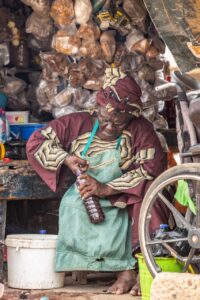
    And let’s be honest, we already believe in these remedies. Half of us have been “forced” to drink bitters at some point in our lives. The only difference now should be scientific validation, standardisation, and packaging that doesn’t look like it was bottled in someone’s kitchen at dawn.

    Research and Strategy: Stop Guessing, Start Knowing

    Beyond plant medicine, there’s a broader need for Ghana to invest seriously in research institutions like the Council for Scientific and Industrial Research (CSIR). Development cannot be based on vibes and assumptions.

    If Ghana wants to make smart decisions about agriculture, industry, climate, health, and even mining, then research must sit at the centre of policymaking, not as an afterthought.

    CSIR and similar bodies should be empowered, funded, and directly integrated into national planning. When government is making decisions about what crops to prioritise, what industries to build, or how to respond to environmental challenges, it should be backed by Ghanaian data, Ghanaian scientists, and Ghanaian insight.

    Because let’s face it, if you don’t invest in your own knowledge systems, you’ll always end up importing someone else’s conclusions and sometimes their mistakes too.

    Defense: Independence Is Not Just Political

    Ghana is often praised as a beacon of stability in West Africa and rightly so. But stability should not lead to complacency. With rising insecurity in the region, from the Sahel downwards, Ghana cannot afford to depend excessively on external military support.

    Self-reliance in defense doesn’t mean becoming isolated or hostile. It means building the capacity to protect your own borders, manage your own intelligence, and respond to your own threats, on your own terms.

    Investing in local defense capabilities, technology, and training is not just about security, it’s about dignity. Because sovereignty is not only about flying your own flag; it’s about being able to defend it without waiting for permission or assistance.

    Manufacturing: The Real Game Changer

    If Ghana truly wants to break the cycle of dependency, manufacturing is where the real battle will be won or lost.

    Right now, Ghana exports raw materials and imports finished goods. In simple terms, we sell cheap and buy expensive. It’s a cycle that keeps economies stuck.

    Industrialisation must move from policy speeches to practical execution. Initiatives like “One District, One Factory” and “24 Hour Economy” are a good start, but they need consistent support, reliable power, access to finance, and most importantly markets.

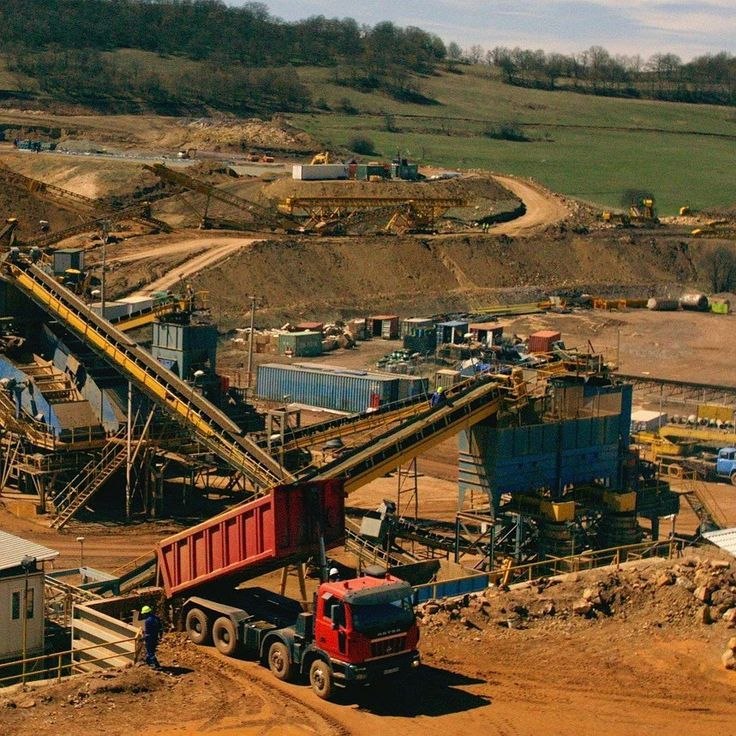
    But here’s the critical point Ghana must not miss: its industrialisation drive should be anchored on mining, one of the most resilient and established sectors of the economy.

    Mining has consistently been a backbone of Ghana’s economy, generating foreign exchange, government revenue, and employment even in turbulent global times. The mistake has been stopping at extraction.

    Imagine if Ghana processed more of its cocoa locally, produced its own pharmaceuticals, assembled its own machinery, and scaled up agro-processing. That’s jobs. That’s revenue. That’s independence.

    Because at the end of the day, no country has ever become truly self-reliant by exporting raw materials and importing finished dreams.

    Rethinking Aid: Partnership, Not Pressure

    The issue of personal data in the reported US deal highlights something bigger: the world is changing, and so is the nature of aid. It’s no longer just about money, it’s about influence, access, and sometimes control.

    Ghana must continue to engage globally, but from a position of clarity and confidence. Partnerships should be mutually beneficial not arrangements where one side feels pressured into compromising core values.

    Data, in particular, is the new gold. And as a country that already produces actual gold, Ghana should understand the importance of protecting valuable resources.

    The Road Ahead

    Self-reliance is not built overnight. It requires discipline, investment, and perhaps most importantly, consistency. Governments must prioritise long-term national interest over short-term political convenience.

    This means:

    • Funding research institutions like CSIR and the Centre for Scientific Research into Plant Medicine
    • Building strong local industries
    • Investing in education and skills development
    • Supporting innovation and entrepreneurship
    • And ensuring that policies are implemented, not just announced

    Ghana has the resources, the talent, and the potential. What it needs now is the will to fully trust in its own capacity.

    Because at some point, every nation must decide: will we always wait to be helped, or will we finally build the strength to help ourselves?

    And maybe, just maybe, the next time a big deal comes knocking, Ghana won’t have to think twice.

  • Unlocking Industrial Growth

    Unlocking Industrial Growth

    Why Ghana’s Mining Industry Should Anchor Local Tyre Manufacturing Factory

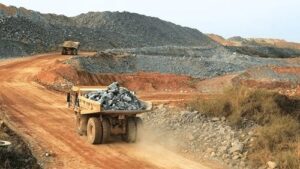
    Ghana’s mining industry, a cornerstone of the national economy, annually spends well over $100 million on the procurement of heavy-duty tyres essential for operating haul trucks, excavators, bulldozers, and other industrial machinery. These purchases form part of mining companies’ local procurement commitments under the Local Content Policy of the Minerals Commission. However, a critical oversight persists although these tyres are procured through local suppliers or intermediaries, they are still entirely imported sourced from manufacturers in China, South Africa, India, and Europe. This model, while technically compliant, results in a massive capital flight and does little to build the industrial base Ghana truly needs.

    To unlock sustainable economic growth and industrial resilience, Ghana must rethink what constitutes genuine local content. The country has a unique opportunity to move from import-dependent transactions to value-added domestic production by establishing a local manufacturing facility for heavy-duty mining tyres. Anchored by the mining sector as a guaranteed off taker, such a factory would not only ensure supply security but also drive backward linkages into rubber farming, engineering, logistics, and job creation.

    This article argues that the mining industry, with its consistent and high-value tyre demand, should become the anchor client for a domestic tyre manufacturing plant. Doing so will redefine local content from merely buying “through Ghanaians” to building in Ghana, a critical shift if the country is to industrialize meaningfully and retain wealth within its borders.


    A Built-In Market for Locally Made Tyres

    With over 100,000 heavy-duty tyres needed annually across Ghana’s gold, bauxite, and manganese mines, the demand base is clear. Mining companies such as Newmont, Gold Fields, AngloGold Ashanti, Golden Star Wassa, Asante Gold Corporation among others and Ghana Bauxite Company all rely heavily on large-scale equipment, each with constant tyre replacement needs due to the harsh operational environments.

    The mining sector alone can provide a guaranteed demand that justifies the establishment of a tyre factory. Additionally, other sectors such as construction, ports, cement, and logistics would further boost market demand, ensuring year-round production capacity is met and sustained.

    Government Must Lead with Policy and Purpose

    To catalyze such a project, the Government of Ghana must take the lead, not just through funding or facilitation, but through strong policy direction and industrial coordination. This includes mandatory local procurement policies, incentives for compliance, and penalties for non-compliance.

    First and foremost, the government can engage all mining companies and large industrial firms a defined timeline (e.g., 3–5 years) to source their tyres exclusively from the local factory, once it is operational and meets international quality standards. This aligns with Ghana’s existing Local Content Policy in the mining sector and creates immediate demand assurance for investors.

    Secondly, firms that comply could benefit from tax rebates or import duty exemptions on spare parts, priority in accessing mining licenses or renewals and public recognition and ESG incentives.

    Third but not the least, companies that continue to import tyres beyond the transition period without a valid exemption could face increased duties or non-deductibility of such costs for tax purposes.

    Through the Industrial Development Support, the government can integrate this project into national industrial policies such as One District, One Factory (1D1F) targeting mining communities and the host communities for this factory. Other policies that could be considered are the Ghana Automotive Development Policy and the Ghana Industrial Transformation Agenda.

    These frameworks already exist to promote local production and can be tailored to support a strategic sector like tyre manufacturing.


    Economic Impact of a Local Tyre Factory

    Establishing a mining tyre factory in Ghana would unlock wide-ranging benefits such as over 500 direct jobs made up of factory workers, engineers, technicians and administrators. Additionally, this can unlock over 1,500 indirect jobs through rubber farming, logistics, and maintenance.

    Further, this factory can boost rubber farming. The factory would stimulate demand for natural rubber, encouraging investment in plantations in Western, Ashanti, and Central regions. Building this factory must ensure that deliberate efforts are made toward sustainable source of raw material. This can create opportunities for plantations farmers in Western, Ashanti, and Central regions.

    It is important to note that this factory, if established would be a source of additional tax revenue for government. An estimate of USD15 to $25 million annually from corporate taxes, VAT, payroll taxes, and supply chain duties.

    Also, this factory will greatly impact import substitution and forex savings. This is through reducing tyre imports by up to $100 million annually and enhancing Ghana’s trade balance and forex reserves.

    Beyond the shores of Ghana is the regional export potential of the factory. Neighbouring countries such as Burkina Faso, Cote d’Ivoire and Mali are all into and would need such supplies. Through the African Continental Free Trade Area (AfCFTA), Ghana-made tyres could serve mining and construction sectors across West Africa.

    Strategic Timing for National Self-Reliance

    The recent disruptions in global trade such as COVID-19 and the Russian-Ukraine war, US Tariff war as well as the increasing costs of logistics have exposed the vulnerabilities of over-dependence on imports. Ghana has the raw materials, affordable labour, and demand base to support tyre manufacturing. With deliberate planning, this industry can thrive within two to three years from inception. All it takes is the right mix of political will, policy direction, and private sector partnership.

    Ghana Must Build This

    A mining tyre manufacturing factory is more than a plant, it’s a symbol of Ghana’s transition from a resource-exporting country to an industrialized economy. With the mining industry as an anchor client and the government as a policy driver, this factory can become a landmark of self-reliance, economic transformation, and African industrial leadership.

    The time to build is now.

    By Albert Amekudzi

  • Operation Feed the Nation

    Operation Feed the Nation

    Leveraging District-Based Food Production and Prison labor For an Enhanced School Feeding Program

    By: Albert Amekudzi

    Agriculture has long been the backbone of Ghana’s economy, employing a significant portion of the population and offering immense potential to address the nation’s food security needs. Despite its importance, Ghana’s agricultural sector faces numerous challenges, including low productivity, limited value addition, and inadequate distribution systems. According to the
    World Bank, over the past five years, Ghana’s agricultural sector has experienced notable fluctuations. In the first half of 2024, the sector expanded by 5.1%, despite a significant
    contraction in cocoa production. This growth was primarily driven by other sub-sectors, highlighting the resilience and potential within Ghana’s agriculture. Despite this, challenges
    persist. In 2024, eight out of Ghana’s sixteen administrative regions faced drought-induced crop failures, leading to increased imports of staples like wheat, corn, and rice. Reuters further
    reported that the cocoa industry has been grappling with the cocoa swollen shoot virus, which has significantly impacted yields and poses a long-term threat to production. However, with
    innovative approaches like district-based food production concept coupled with labour from the Prison Service, Ghana can improve both food security and the effectiveness of its National
    School Feeding Program (NSFP).

    District-Based Food Production Concept

    The district-based food production model is a concept aimed at having each district focused on producing a specific food crop based on its comparative advantage. The districts are to harness
    labour from the prison service for agricultural activities. This integrated approach can create a sustainable food system that benefits local economies, improve food security, strengthens the
    school feeding program, and simultaneously provides rehabilitative opportunities for prisoners. The first step toward transforming Ghana’s agricultural sector is for the central government to
    show leadership and commitment in improving the country’s food security, reducing food inflation and resourcing key research institutions to undertake extensive research in that regard.
    With an institution like the Centre for Scientific and Industrial Research (CSIR) government needs to resource it to map the country and identify each district’s comparative advantage about
    geographical, climatic, and cultural strengths in food production. Secondly, the Centre, upon identifying these, needs to provide scientific information with regards to high yielding seeds
    for these districts. This must be done in collaboration with the various district agriculture extension officers. This part of the programme will essentially create thousands of jobs for the
    unemployed Agriculture Extension Officers who have been home for years without jobs. Agricultural research and extension services are crucial in disseminating new knowledge,
    technologies, and practices to farmers. Strengthening public agricultural research institutions and extension networks will help bridge the knowledge gap, particularly in rural areas. This
    approach has the potential to reduce dependence on food imports, create stable local food supplies, and stimulate economic activity in rural areas.

    Identifying Key Crops for Each District

    Every district in Ghana has unique agro-ecological characteristics that make it better suited for specific types of crops. By focusing on these strengths, districts can increase agricultural output
    and create food surpluses that can be channelled into the school feeding program. For example, Northern districts including Upper East, Upper West, and Savannah regions have the right
    conditions for growing rice, maize, and sorghum. These regions could specialize in staple crops like maize and rice, which are essential to the diet of schoolchildren and the larger Ghanaian
    society. Central and Western regions are well-suited for crops like cassava, plantains, and palm oil. Volta Region’s fertile land is ideal for growing vegetables like tomatoes, peppers, and leafy
    greens. The region can focus on producing fresh vegetables that contribute to the nutritional diversity of the country. The Ashanti and Brong-Ahafo Regions could be the major suppliers
    of beans, groundnuts, and even the raw materials to produce local food products such as groundnut paste or beans. Each district should develop a local agricultural plan that reflects the
    crops it can most efficiently produce, with a focus on maximizing yield while minimizing environmental impact.

    Agricultural Infrastructure

    The Deputy Minister for Agriculture, John Setor Dumelo, during his vetting indicated that key among the challenges farmers face is access to equipment and farmland. Due to the country’s
    land administration system, with almost all lands either being family land or stool lands, government must take a bold step to engage the national and regional house of chiefs to secure
    land for this national project. It is a collective responsibility to ensure that we are able to feed our people, hence, government needs to work with the chiefs to release lands for this purpose.
    Government through the district assemblies may go into a sharing ratio with the landowners to ensure that all stakeholders buy into the idea. As government steps up its fight against illegal
    mining (galamsey) and seizing equipment, these machines can be used in some other critical areas by the districts. But we must be careful not to allow these illegal miners to use their
    influence to retrieve the equipment from the districts. Ghana is also blessed with abundance of water, hence the need to win the fight against illegal mining to secure our water bodies. The
    success of this project will also depend on the ability of the districts to ensure all year-round farming. This can be achieved through mechanised irrigation infrastructure to reduce
    dependence on erratic rainfall, especially in regions vulnerable to droughts. Community involvement in the implementation and management of the program can help ensure that it
    aligns with local needs and preferences. Communities could also participate in the cultivation and provision of food, creating a more sustainable model. Improving agricultural infrastructure
    is key to ensuring that food produced in rural areas reaches urban markets.

    Farm Labour and Agricultural Production

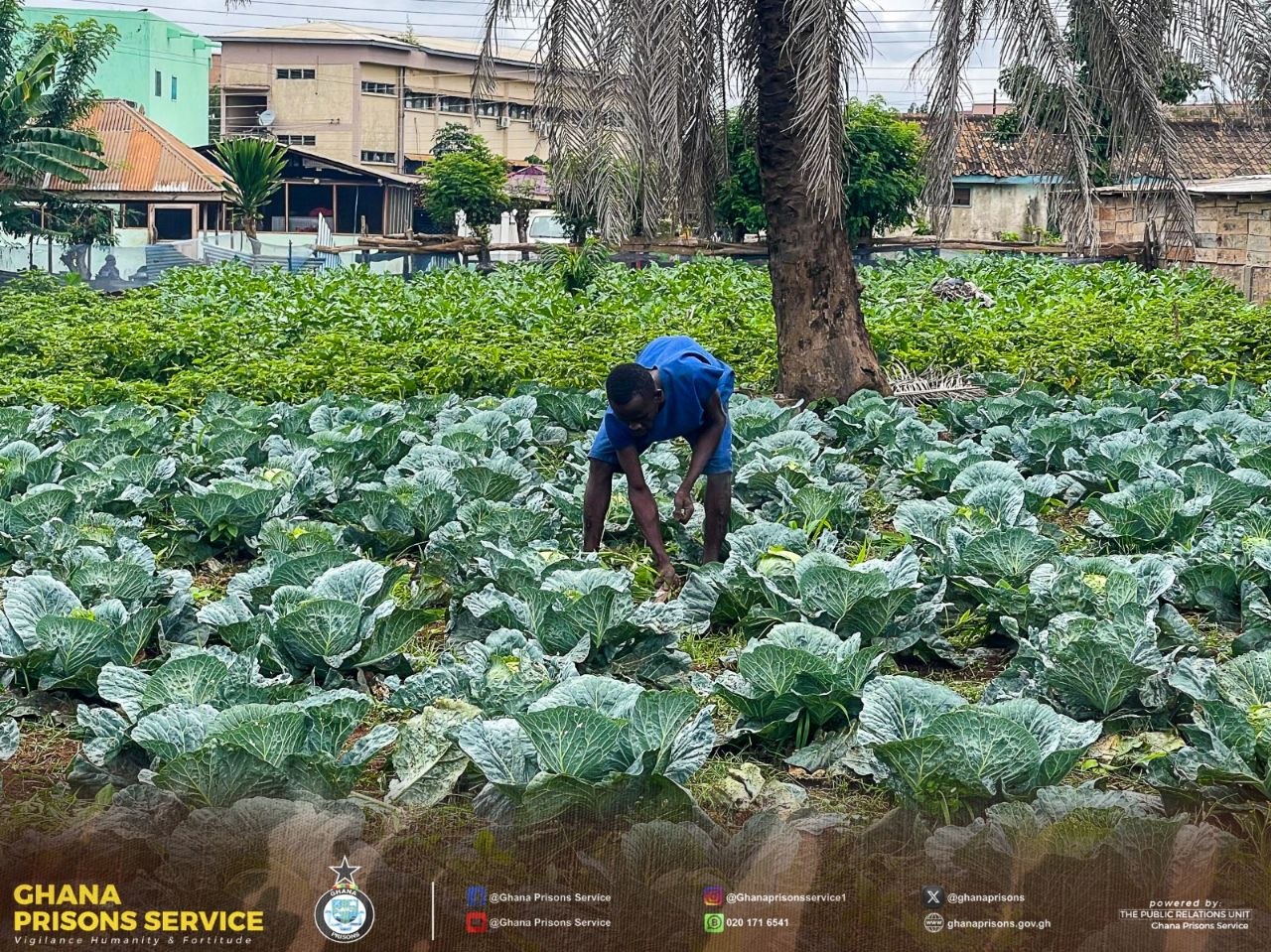
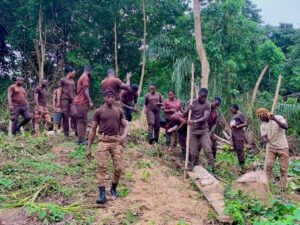
    A key aspect of the proposed concept is utilizing labour from the Ghana Prison Service. This not only provides prisoners with a productive means of rehabilitation but also contributes to
    addressing the labour shortage in agriculture. While Burkina Faso has implemented a similar concept where inmates receive reduced prison sentence while working on the farms, Ghana
    can adopt a similar approach and or add incentives by remunerating the prisoners through an investment account. And upon completing their prison term, they may decide to take their
    money and start a business or have the option of being employed as farm managers.
    Additionally, Prison farms have been successfully utilized in many countries, the government of Ghana can start its “Akukor Nkiti Nkiti” policy across prison facilities by supporting them
    with initial birds and encouraging them to build the infrastructure in and around the prison environment. Furthermore, government may enhance this project by ensuring that all senior
    high schools have school farms and also run an agriculture programme where the school farms can be used as practical sessions. It is imperative to note the need to have a comprehensive
    education around agriculture if Ghana wants to improve agriculture and reduce unemployment.

    Prisoner Rehabilitation Through Productive Labor

    The inclusion of labour from the prison system serves a dual purpose. First, it provides the country with much-needed agricultural labour, and second, it offers prisoners an opportunity
    to contribute positively to society. Productive labour has been shown to reduce recidivism rates, as prisoners gain skills, develop a strong work ethic, and feel a sense of purpose. By engaging
    prisoners in productive agricultural work, the government can contribute to rehabilitating individuals and reintegrating them into society post-release. This provides them with the skills
    and experience to pursue farming or agribusiness after serving their sentences.

    Training Prisoners in Agricultural Skills

    According to reports, as of January 13, 2025, the total prison population in Ghana was 13,946, comprising 12,471 convicted prisoners, 1,022 remand prisoners, and 453 trial prisoners. With
    this numbers, the Ghana Prison Service can collaborate with agricultural training institutions to provide prisoners with skills in modern farming techniques, agro-processing, and farm
    management. This will equip them with the knowledge necessary for sustainable farming practices. Structured programs can be introduced to teach prisoners how to grow crops, manage
    farm equipment, and use modern agricultural tools. Training can also focus on pest management, irrigation, and sustainable practices such as organic farming. Agro-Processing
    Skills: Beyond farming, prisoners can be trained in agro-processing techniques, such as milling, canning, or packaging, to ensure that they can add value to the crops they produce. This
    enhances the potential for local value chains to thrive and encourages entrepreneurship. The Ghana Prisons Service may engage with some key development partners such as GIZ Ghana
    for both technical and financial support.

    Prison Farm Initiatives

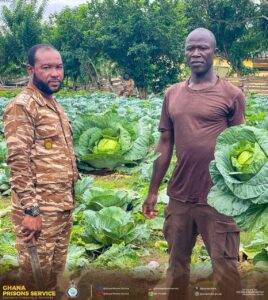
    Prisons can establish agricultural farms within their facilities or on nearby lands. These farms can produce a range of food crops, which can be used to support both the prison population
    and the school feeding program. Prisoners can help cultivate staple crops like maize, beans, rice, and cassava, which are essential to the school feeding program. By linking these crops to
    the districts producing them, prison farms can serve as a source of both local and national food security. In addition to crop production, prisoners can participate in livestock farming,
    including poultry, piggery, and goat farming. These animals provide a steady supply of protein (meat, eggs, milk) for inclusion in school meals. Prison farms can also focus on sustainable
    farming practices, including organic farming, composting, and soil conservation, to ensure long-term productivity and environmental protection.

    Improving the School Feeding Program through Local Agricultural Integration

    By focusing on local food production and utilizing prison labour, the government can ensure a sustainable and more efficient supply chain for the National School Feeding Program. District
    based food production can help ensure that schools receive locally grown food. By sourcing ingredients like maize, beans, rice, vegetables, and meat from nearby farms (including those
    operated by prisons), the program can reduce transportation costs and improve the freshness and quality of meals. Schools can purchase food directly from the district farms (including
    prison farms), ensuring that the supply chain is both efficient and reliable.

    Scaling the Program

    The ban on export of key staples including rice, millet, maize, sorghum, and cowpeas by the Burkinabè government makes it imperative for the Ghanaian government to improve upon
    agriculture and produce enough to feed its citizens. Ghana has vast and fertile land to produce enough food to feed it citizens and this can only be achieved through strong and committed
    leadership. By integrating district-based food production and prison labour, the school feeding program can scale effectively and reach more schools across the country. This will ensure that
    children from both urban and rural areas benefit from nutritious meals, reducing hunger and improving educational outcomes.

    Creating a Sustainable Agricultural Value Chain

    To ensure that district-based food production is effective and sustainable, the government should focus on creating value chains within each district. This involves ensuring that the entire
    process from production to processing, storage, and transportation is optimized. To add value and reduce post-harvest losses, districts should invest in local processing facilities. For
    example, local cassava mills, rice mills, and tomato-paste factories can be set up to add value to raw agricultural products before they are sent to schools. The various districts need to be
    creative and directly engage key development partners for technical and financial support without necessarily relying on the central government to provide them with all the resources.
    Internally generated funds can also be used for some of these special initiatives to ensure that the district contributes significantly to the national food stock.
    Having implemented a successful and yielding programme, the districts may be directed to support the various senior high schools and basic schools within their districts with food
    produce in support of the national school feeding programme by the central government. The surplus food produce can be supplied to market women to help control food inflation. Further,
    the various districts can collaborate for butter system depending on the districts’ strength.

    Conclusion

    Developing Ghana’s agricultural sector to feed the nation and strengthen the National School Feeding Program requires innovative strategies and a multi-pronged approach. By leveraging
    district-based food production, each area can focus on its comparative agricultural strengths, creating food surpluses that contribute to local economies and national food security.
    Furthermore, utilizing labour from the Ghana Prison Service offers a sustainable way to engage in productive agricultural activities while providing rehabilitative opportunities for prisoners.
    This integrated approach will not only address food insecurity but also enhance the nutritional content of school meals, create jobs, and stimulate local economies. Ultimately, a revitalized
    agricultural sector, coupled with a stronger school feeding program, can contribute to the health, education, and well-being of Ghana’s future generations.
    The write is an integrated marketing communication consultant, sustainability and health & safety professional with extensive experience in marketing, development communication,
    content creation, storytelling, event planning and management.
  • A Bleeding Nation With No Conscience, Values and Morals

    A Bleeding Nation With No Conscience, Values and Morals

    Ghana is bleeding. Not from the guns of war, but from the slow and painful destruction of its environment, its values, and its conscience. Our rivers, once the lifeblood of communities, are poisoned by illegal mining. Our forests, once a proud heritage, are stripped bare. Our morality, once anchored in honesty and communal pride, has been eroded by greed, corruption, and silence of the majority. Our nation is at a crossroads, and the path we are treading is one that threatens the very essence of our spirit, soul and survival.

    The Environmental Tragedy

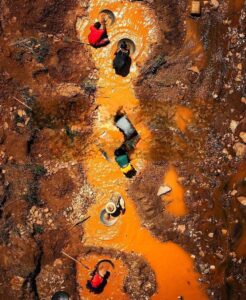
    Illegal mining, or “galamsey,” has left gaping wounds across our landscape. Water bodies like the Pra, Ankobra, and Offin are now rivers of poison, choked with mercury and chemicals. Villages that once drew clean drinking water from streams now depend on sachet water or risk death. Children who once swam joyfully in clean streams can now only stand by the banks of toxic pits. Ghana is losing her veins and arteries, her rivers, and when a body loses blood, it dies. So too does a nation bleed when its environment is destroyed. This is not just an environmental crisis; it is an existential one. A nation that destroys its own sources of life destroys its future.

    A Crisis of Conscience

    What is most disturbing is not only the destruction, but the collective apathy. Politicians promise action but shield culprits. Traditional leaders take royalties from miners. Citizens, who should demand accountability, shrug their shoulders and say “this is Ghana. This is normal.” We are a nation that proclaims to be highly religious, our churches and mosques overflow every week, but we return to dishonesty, corruption, and indifference as soon as we step outside. We sing hymns of holiness on Sunday and dig pits of destruction on Monday. We lift hands in prayer but use those same hands to bribe, pollute, and cheat. Religion without values is hypocrisy, and faith without morals is empty.

    The Four-Way Test We Ignore

    The Rotary International Four Way Test of the things we think, say or do challenges us with a simple but profound moral guide:

    • Is it the truth?  

    We know the truth: galamsey is destroying our future. Yet we lie to ourselves that it brings “jobs” and “development.”

    • Is it fair to all concerned? 

    There is nothing fair about poisoning rivers, robbing future generations of clean water, and enriching a few at the expense of the many.

    • Will it build goodwill and better friendships? 

    How can a practice that pits communities against each other, destroys livelihoods, and breeds mistrust ever build goodwill?

    • Will it be beneficial to all concerned? 

    The answer is clear: illegal mining benefits only a greedy few. For the majority, it brings death, poverty, and destruction.

    If we applied this test honestly, every excuse we make for inaction would collapse.

    The Price of Silence

    A bleeding nation cannot heal if her people refuse to speak. Our silence is complicity. The danger is not only in the actions of those who mine illegally, but in the silence of those who know better yet do nothing. We cannot continue to worship in sanctuaries while our rivers die. We cannot preach morality but practice corruption. Conscience must awaken. Values must be lived, not recited. Morals must guide our daily choices, not just our speeches.

    A Call to Courage

    It is time for us to rise, not as passive spectators but as active defenders of what is right. To say no to the destruction of our water bodies. To say no to leaders who enrich themselves while the nation rots. To say no to the normalization of corruption. Ghana needs men and women who will stand by truth, even if they stand alone.

    Ghana can still heal. But healing requires courage, courage from leaders to enforce laws without fear or favour, courage from citizens to reject bribes and call out wrong, courage from communities to protect their land. Above all, it requires a return to conscience, values, and morals.

    The question is simple: will we continue to let Ghana bleed, or will we rise to save her? The Four-Way Test is before us. The truth is before us. The choice is ours.

    By: Albert Amekudzi